





Protect sensitive materials from UV light
 Marc Martens

UV light can affect the stability and performance of sensitive materials long before they reach the next process step. Understanding where exposure can occur, and choosing the right barrier, helps protect product integrity throughout storage, handling and transport.
When UV light becomes a product integrity risk
Ultraviolet (UV) light is electromagnetic radiation with wavelengths between 100 and 400 nm. It contains more energy than visible light and can trigger chemical reactions in materials that are sensitive to it.

Sunlight is the most familiar source of UV radiation, but materials can also be exposed to UV light from artificial sources. Depending on the material, wavelength, exposure time and intensity, that exposure can cause degradation, discoloration, curing or changes in other critical properties.
For manufacturers handling sensitive pharmaceuticals and fine chemicals, the practical question is therefore not simply whether a material is light-sensitive. It is where and for how long it may be exposed during filling, handling, storage and transport.
Protect sensitive materials throughout their journey
Avoiding UV exposure entirely is not always practical. Materials may move between production areas, wait in warehouses, travel between manufacturing sites or customers, and encounter varying storage and transport conditions along the way.
An effective UV barrier provides another layer of protection around the material when control of the external environment is limited.

Opaque packaging can significantly reduce the amount of UV light reaching the contents. The level of protection, however, depends on the material, colorant and concentration used in the packaging.
How color creates a UV barrier
Colorants can absorb or reflect light before it reaches the packaged material. Their effectiveness varies considerably, which means that appearance alone does not determine whether packaging provides sufficient UV protection.
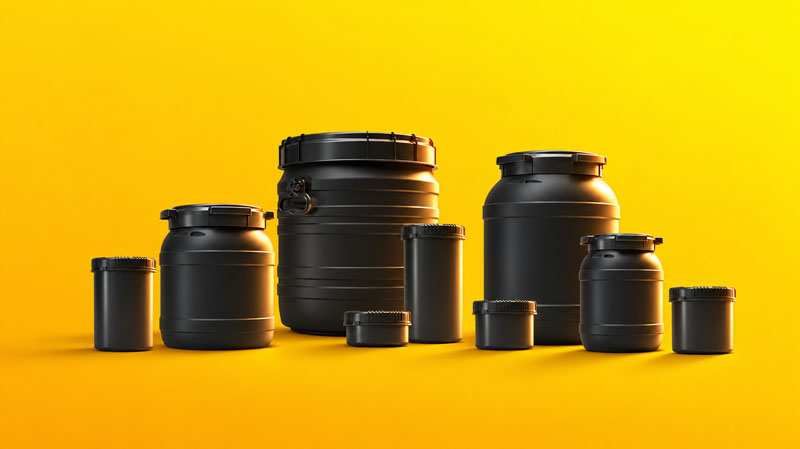
Carbon black is particularly effective at absorbing light. CurTec therefore uses black HDPE for its dedicated UV-safe packaging. The colorant is incorporated into the plastic during manufacturing, creating a permanent barrier rather than a coating applied to the surface.
CurTec UV-safe drums and Packo jars provide a barrier against UV light with wavelengths between 200 and 400 nm.
Read why UV-safe packaging protects high-value UV-curable lacquers
UV protection is only one part of product integrity
Light sensitivity rarely exists in isolation. The same material may also require protection against moisture, foreign particles, tampering or physical damage. Hazardous materials may introduce additional transport and certification requirements.
That is why packaging selection should consider the complete material journey rather than one barrier property alone.
For a UV-sensitive material, important questions include:
- Which wavelengths can affect the material, and how sensitive is it to exposure?
- Where can exposure occur during filling, handling, storage and transport?
- How long could the material remain exposed under those conditions?
- Does it also require protection against moisture, foreign particles or tampering?
- Are UN certification, cleanliness or specific handling requirements involved?
- How will the packaging interact with the customer's filling, transfer and downstream processes?
Looking at these requirements together helps determine which packaging configuration best supports product quality and reliable handling throughout the supply chain.
UV-safe packaging from CurTec
CurTec offers UV-safe screw-lid drums and Packo jars for materials that require protection against UV light between 200 and 400 nm.
Depending on the packaging format, UV protection can be combined with other features that support product integrity and safe handling, including moisture protection, tamper evidence and UN certification for hazardous solids.
Protect the material, not just the container
Every light-sensitive material has its own stability, handling and supply-chain requirements. CurTec helps translate those requirements into a packaging solution that supports product integrity from filling through storage and transport to the next process step.
