


Moisture control
 Marc Martens

Moisture can affect material quality long before a product reaches final use. For manufacturers in biopharma, small molecule pharma and fine chemicals, controlling exposure during filling, storage, handling and transport can be essential to keeping sensitive materials within specification.
Many pharmaceutical ingredients, bioprocess materials and specialty chemicals are hygroscopic and absorb moisture from the surrounding air. Over time, that exposure can affect their physical properties, stability and performance.
Moisture protection far beyond USP requirements
USP <671> defines performance testing and moisture vapor transmission classifications for pharmaceutical packaging systems. CurTec uses its tight-container classification as a recognized benchmark for moisture barrier performance.
All CurTec products achieve MVTR rates of less than one-third of the limit defined by US Pharmacopeia chapter <671> for tight containers.
This provides manufacturers with measurable performance data when assessing how packaging can contribute to moisture control during storage, transport and use.
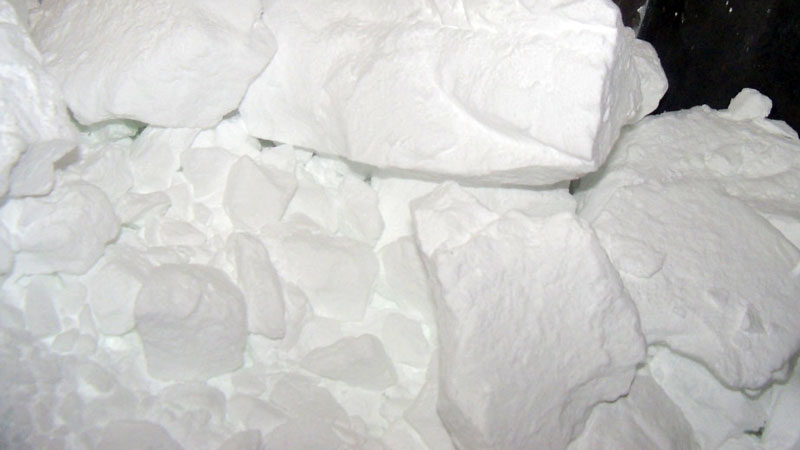
Damage due to caking, softening and drying
The effect of uncontrolled moisture depends on the material. Powders can harden or cake, granules and flakes can soften, and tablets can change in appearance or texture.
Moisture loss can also create problems by causing materials to dry out. In either direction, changes in water content can affect material properties and potentially compromise downstream processing or product quality.
Control moisture throughout the process
Effective moisture control does not start or end with packaging. Water content needs to be considered throughout manufacturing, filling, storage, transport and use.
The appropriate strategy depends on the sensitivity of the material, environmental conditions, storage time, transport route and the way the material is handled after opening. Packaging is one part of that wider control strategy and should provide barrier performance that matches the requirements of the application.
Moisture control during bulk packaging and storage
Sensitive materials are often filled, stored and transported in bulk before they enter the next manufacturing step. Manufacturers may use desiccants, liners or other measures to help manage moisture exposure.
These measures can be necessary for some applications, but they can also introduce additional materials, handling steps and qualification requirements. Selecting bulk packaging with strong, tested moisture barrier performance can help simplify the overall moisture-control strategy and reduce unnecessary process complexity.
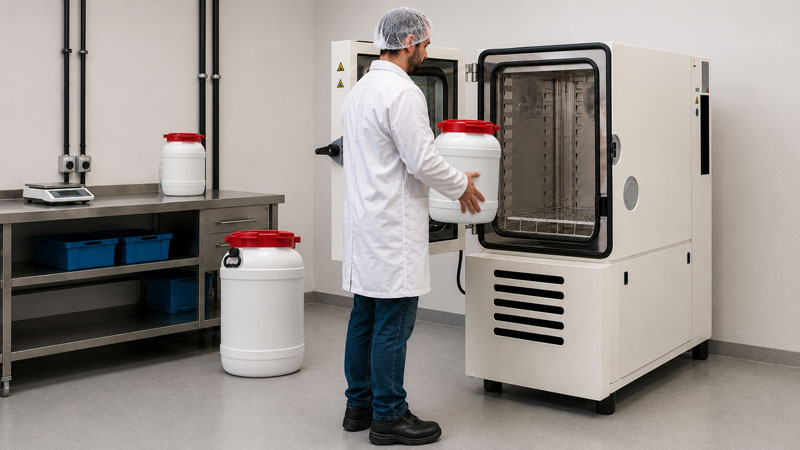
Tested moisture barrier performance
CurTec drums, pails and jars are designed with closure systems that provide a strong barrier against moisture vapor. Depending on the product family, rubber or integrated gaskets support a secure closure and help limit moisture vapor transmission.
The moisture vapor transmission performance of CurTec packaging has been determined according to an ASTM test standard by an independent laboratory. ASTM D4279 specifically addresses water vapor transmission testing for bulk shipping containers.
Rather than relying on a general statement about moisture protection, CurTec records the measured moisture vapor transmission rate for its packaging formats. This provides objective data that can be used when evaluating a packaging solution for a specific material and process.
MVTR data to support qualification
Moisture vapor transmission rate, or MVTR, expresses how much water vapor passes through a packaging system under defined test conditions. A lower MVTR indicates a stronger barrier against moisture vapor.
For manufacturers handling moisture-sensitive materials, this data can support packaging selection, risk assessment and qualification. CurTec can provide an MVTR report for its packaging and help customers evaluate the results in relation to their material, fill volume, storage conditions, transport requirements and handling process.
This makes moisture control more than a packaging feature. It becomes part of a considered approach to protecting material quality throughout the supply chain.
Request a moisture vapor transmission report and discover how CurTec packaging can contribute to effective moisture vapor control.
